What we measured
The 2 a.m. Test
Founder
Sean Lin
Associate Member, Ohio Pharmacists Association.
Supplements, does not replace, your manual temperature log.
We hold no patient information.
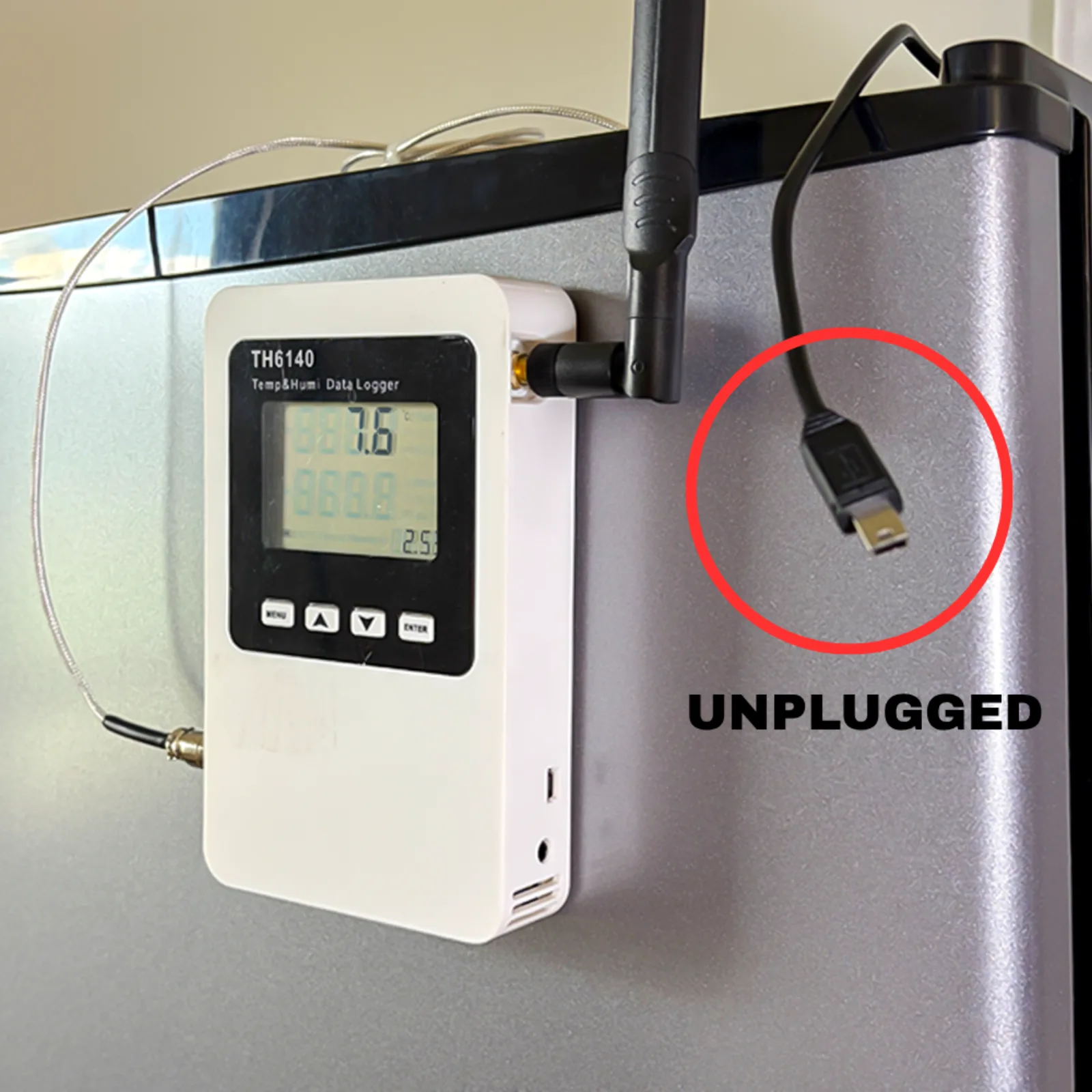
- We did
- Pulled power on a cold fridge/freezer
- Result
- 120 h to empty; ≥ 96 h under weak signal
- We say
- Over 72 hours of battery. Measured, not estimated.
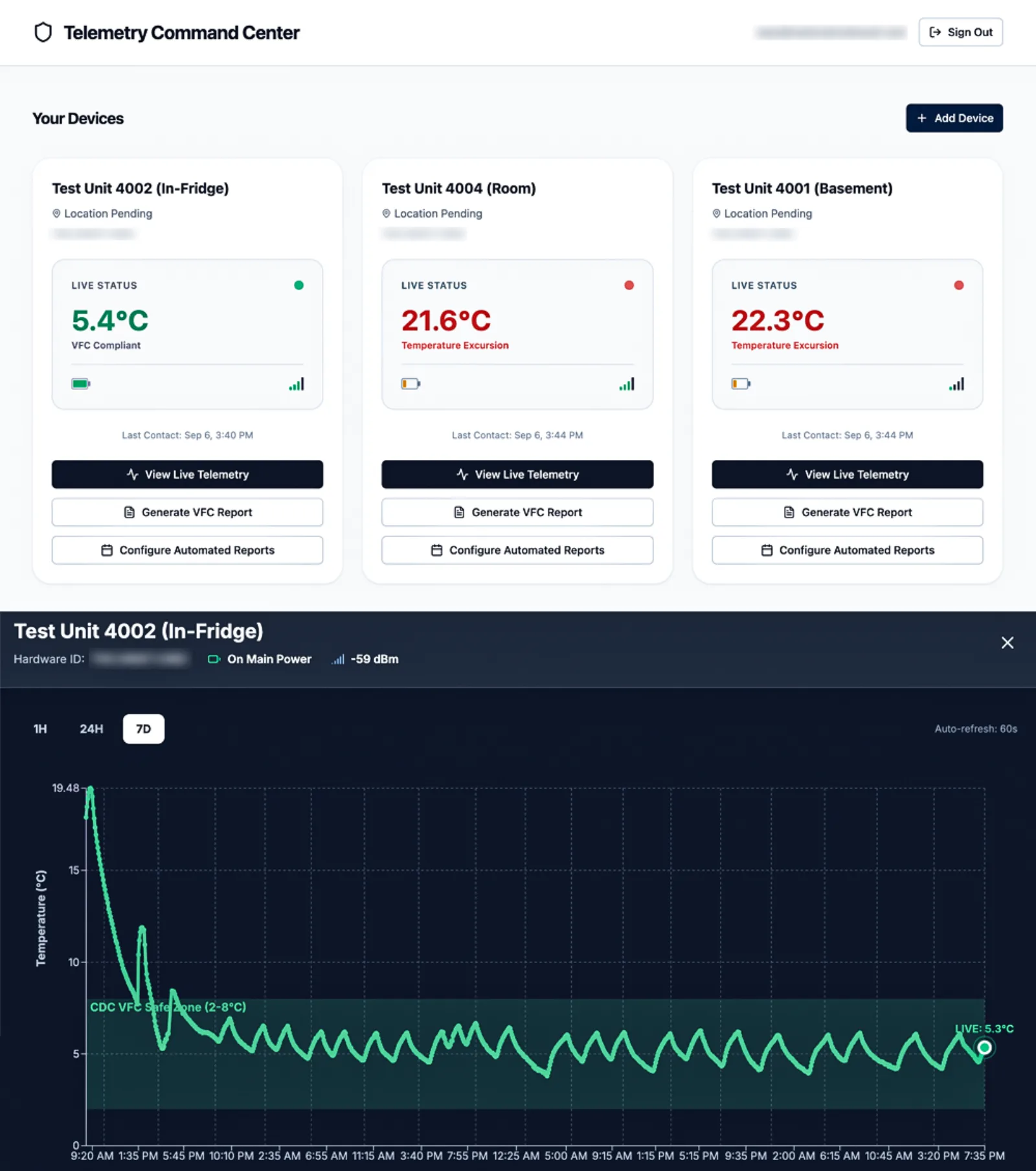
- We did
- Blocked the signal for 48 h
- Result
- 576 of 576 readings kept; delivered with original timestamps; buffer ≈ 69 days
- We say
- An outage delays your record. It never puts a hole in it.
- We did
- Tried to edit/delete alert records with our own admin key
- Result
- Refused
- We say
- Your alert record can't be edited or deleted — not by anyone, including us.
- We did
- Phone on Do Not Disturb / Sleep
- Result
- Rang through 5 of 5
- We say
- The 2 a.m. call gets through — after you save us as an emergency-bypass contact (30 seconds, done at setup).
- We did
- Probe crossed MAX or MIN °C
- Result
- Call on the first out-of-range reading
- We say
- Your phone rings within 11 seconds to 6 minutes of going out of range, depending on where in the 5-minute cycle it happens.
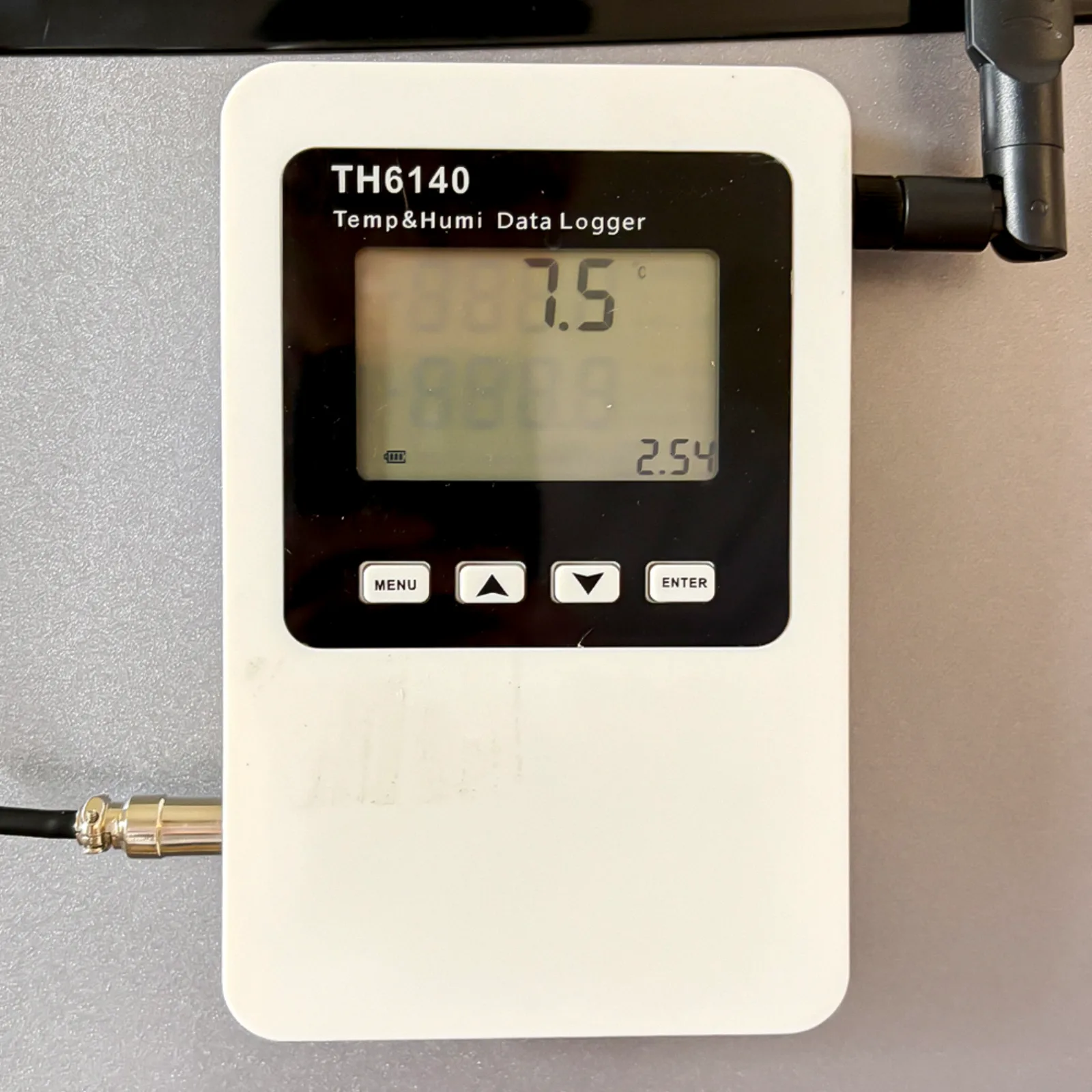
- We did
- Cut power to the device
- Result
- Confirmed twice, then called
- We say
- Power failure: within 10 minutes.
- We did
- Unplugged the probe
- Result
- 15 min without a valid reading → call (observed: 13 min)
- We say
- Cable fault: confirmed twice before we wake you — 10 to 15 minutes.
- We did
- Silenced the device
- Result
- Independent watchdog reported it
- We say
- Dead device: within 20 minutes. If our own monitoring stops, a watchdog tells us within 15.
- We did
- Sixteen days trying to break it
- Result
- Every failure found was fixed; none found by customers
- We say
- —
- We did
- Every reading
- Result
- Carries its own signal strength
- We say
- —
ISO/IEC 17025-accredited calibration certificate per unit (CNAS, ILAC MRA), traceable to national standards.
Evidence log
- Aug–Sep 2026: 16-day stress test, five prototype units.
- Sep 1, 2026: ice-point verification, three units.
The problem — Ohio Department of Health records, obtained under the Public Records Act
- 334 incidents, Jan 2024 – Jul 2026 · ≈ $9.6 M destroyed · ≈ 74,700 doses
- ≈ $30,000 average per incident · ≈ $15,000 median (always give both)
- Power outages: 19% of 2026 incidents (13% → 11% → 19%)
- ≥ 15 incidents at sites that already had WiFi loggers
- Longest undetected failures: 1,626 h and 1,253 h
- Most losses found by a person noticing, not by an alert
- ≈ 85% of 2026 causes: equipment, power, or monitoring gaps — not human error
- Private stock has no program behind it — coverage depends on your policy, and every claim depends on a temperature record.
How it works
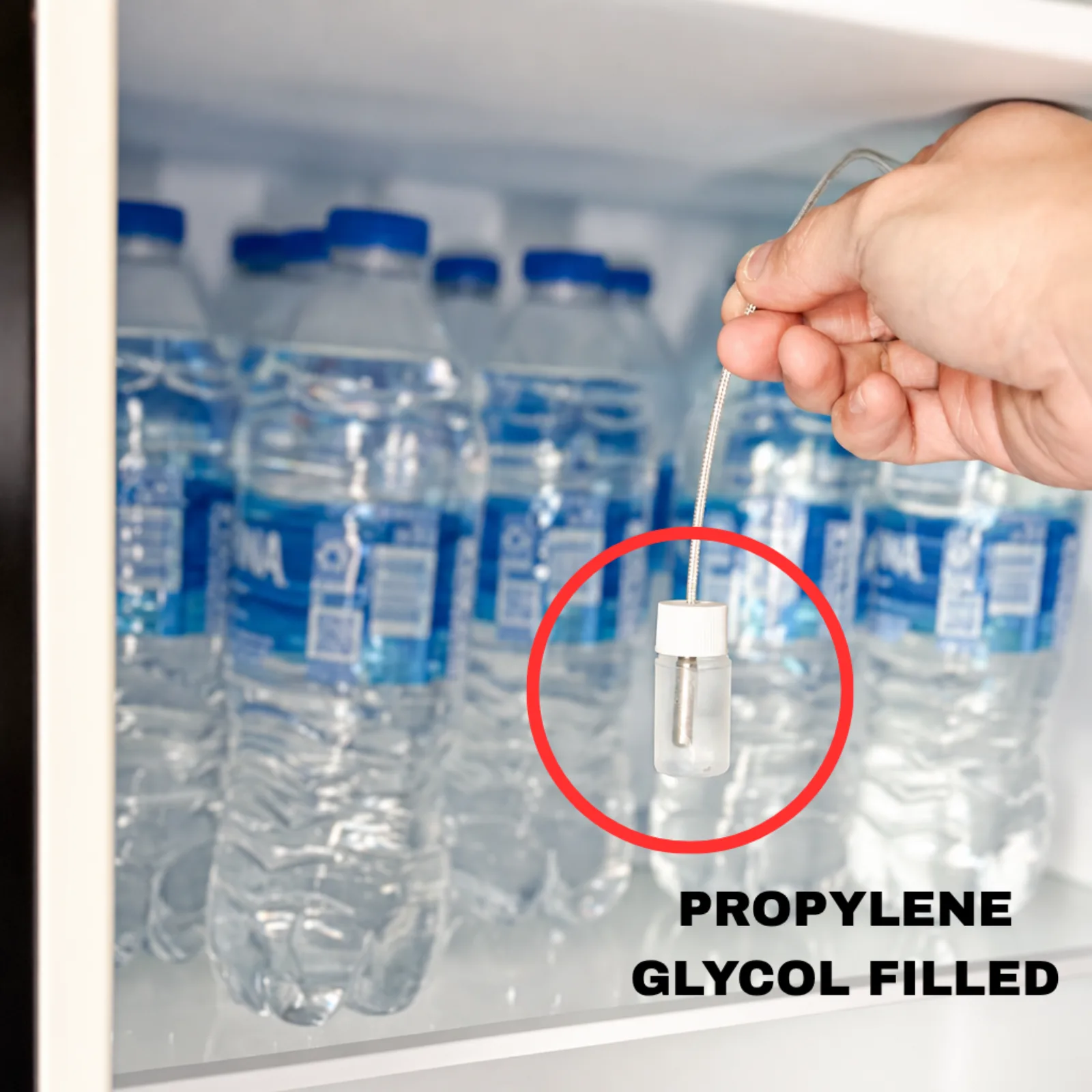
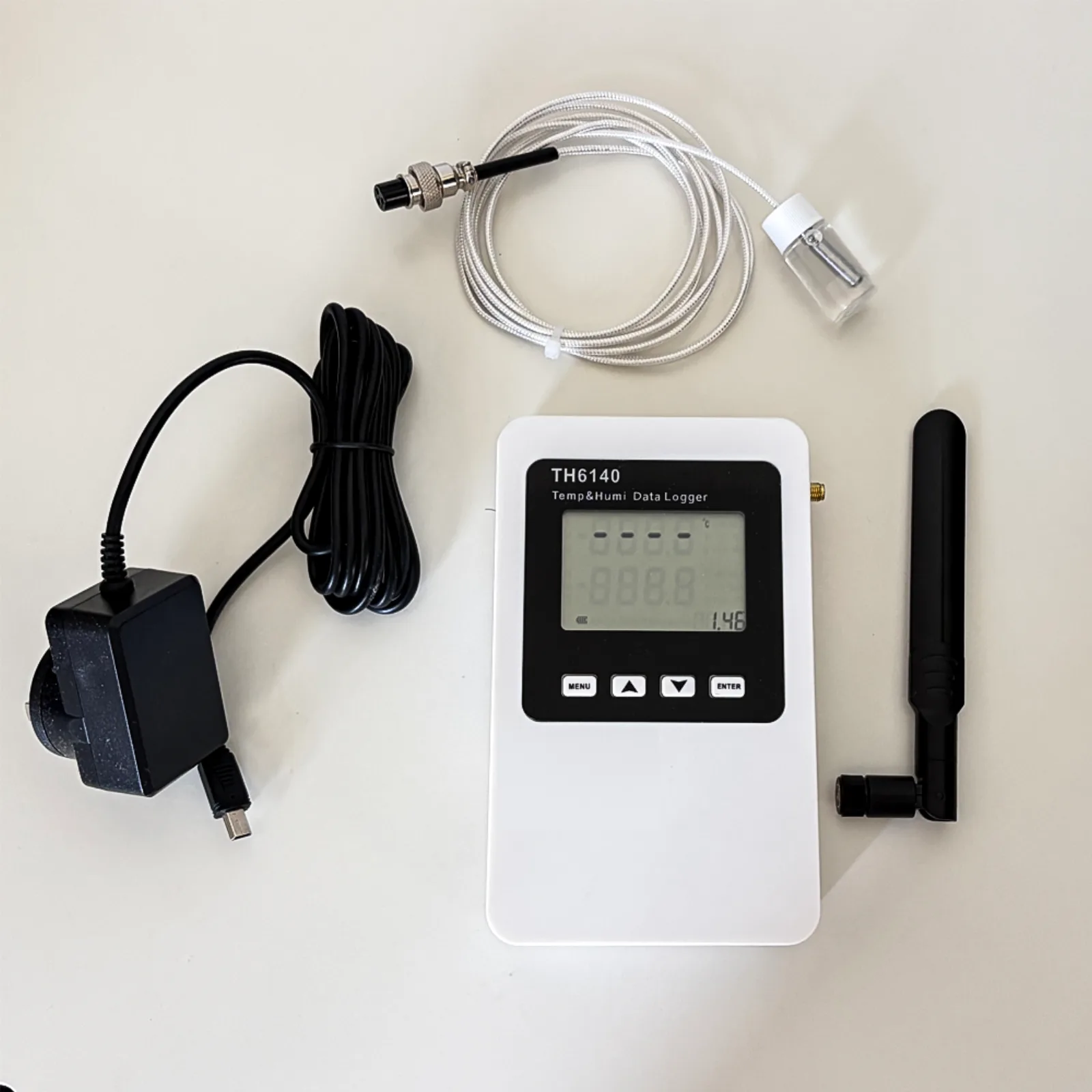
- Three parts: a sensor probe in a sealed glycol vial (in the fridge/freezer), a small cellular unit (outside), a power adapter. No WiFi, no hub, no IT setup.
- Reads every 5 minutes. Sends over nationwide 4G LTE.
- Its own display shows the current temperature.
- Battery-backed; behaves the same on battery.
- Out of range → voice call. Back in range → text.
- One account, all your fridges/freezers, one dashboard.
- One-click audit PDF for inspections.
- Holds no patient information.
Different
- we call, through Do Not Disturb
- cellular + battery — a WiFi logger stops when the WiFi or the outlet does
- we publish what we measured and what we haven't
- a certificate for each serial plus our own ice-point check
- public price
- one account, all fridges/freezers, one-click audit PDF
- a real founder in Carrollton you can reach directly
Not this
- a substitute for your manual log and SOPs
- the state's VFC logger — Ohio supplies one for public vaccine; we're built for the private stock beside it
- an in-person installation service